Following the previous Bitcoin analysis ( https://www.gomarkets.com/au/articles/economic-updates/bitcoin-usd-technical-analysis/ ), bitcoin continues to break below pattern after pattern, recently breaking out and re-testing a descending flag pattern on a 4h time frame as seen below: With the next major support sitting around $17,619, it won’t be a surprise if bitcoin comes down to that area. Looking at the correlation between Bitcoin and Ethereum, the last 7 days of price action shows a correlation of.89, which is a positive value that indicates a positive correlation between the two. A positive correlation means that the two moves very similar to one another. [caption id="attachment_273298" align="alignnone" width="602"] (https://cryptowat.ch/correlations)[/caption] [caption id="attachment_273299" align="alignnone" width="527"] (https://cryptowat.ch/correlations)[/caption] For ETHUSD (Ethereum), making similar patterns to BTCUSD, has also recently broken out of a descending flag pattern, signalling a probable continuation of the 4h downtrend, there is a high probability of ETHUSD reaching the next major support around $1012.
More downside for major cryptos?

Related Articles

ASX defence stocks are back on more watchlists and according to the Stockholm International Peace Research Institute (SIPRI), global military spending reached approximately US$2.718 trillion in 2024, up 9.4% in real terms.
Australia’s current defence settings are set out in the 2024 National Defence Strategy and related investment planning documents, which outline long-term capability funding priorities. Furthermore, Canberra has pointed to A$330 billion of capability investment through 2034, including added funding for surface combatants, preparedness, long-range strike and autonomous systems.
Here is the part most people miss: not all ASX defence stocks are the same trade. Some sit close to naval shipbuilding. Some are counter-drone names and some are smaller, higher-risk operators where one contract may matter much more than the market assumes.

5 volatility questions Aussie traders are asking right now
These five names are not a buy list, rather they are a practical watchlist for investors trying to understand where procurement momentum may actually show up on the ASX.
1) Austal (ASX: ASB)
Austal is one of the ASX-listed companies most directly exposed to Australia’s naval shipbuilding pipeline, although contract execution, margins and delivery timing remain important variables.
They aren't just winning random contracts; they have signed a massive legal agreement (the Strategic Shipbuilding Agreement) that makes them the official partner for building Australia's next generation of mid-sized military ships in Western Australia.
In February 2026, the government gave Austal the green light on a $4 billion project. This isn't for just one ship, it’s for 8 "Landing Craft Heavy" vessels. These are huge transport ships (about 100 metres long) designed to carry heavy tanks and equipment directly onto a beach. But here is the part most people miss, shipbuilding is a marathon, not a sprint.
As you can see in the delivery timeline, while construction starts in 2026, the final ship won't be delivered until 2038. For an investor, this means Austal has a "guaranteed" stream of income for the next 12 years, but they have to be very good at managing their costs over that long period to actually make a profit.
2) DroneShield (ASX: DRO)
If you have seen footage of small drones disrupting modern battlefields, DroneShield is building part of the "off switch". Its focus is counter-drone technology, including systems that detect, disrupt or defeat drones using electronic warfare, sensors and software-led tools, rather than relying only on traditional munitions.
By early 2026, DroneShield had moved beyond the label of a promising start-up and into a much larger commercial phase. It reported FY2025 revenue of A$216.5 million, up 276% from FY2024, and said it started FY2026 with A$103.5 million in committed revenue.
One point the market may overlook is the software layer in the model. DroneShield reported A$11.6 million in Software as a Service (SaaS) revenue in FY2025 and said it is working towards SaaS making up 30% of revenue within five years. Its subscription model includes software updates for deployed systems, which adds a growing stream of recurring revenue alongside hardware sales.
Among ASX defence stocks, DroneShield is one of the most direct ways to follow the counter-UAS theme. It is also one of the names where sentiment can swing quickly, because growth stories can rerate both up and down when order timing changes.
The defence stocks to watch: The Iran War winners & losers
3) Electro Optic Systems (ASX: EOS)
EOS builds both the "brain" and the "muscle" for military platforms. It is best known for remote weapon systems, which allow operators to control armed turrets from inside protected vehicles, and for high-energy laser systems aimed at counter-drone defence. EOS has said its unconditional backlog reached about A$459.1 million in early 2026, following a series of contract wins through 2025. That points to a much larger base of secured work, although delivery timing and revenue conversion still matter.
EOS signed a €71.4 million, about A$125 million, contract with a European customer for a 100-kilowatt high-energy laser weapon system. EOS says the system is designed for a low cost per shot and can engage up to 20 drones a minute. The Australian Government has set aside A$1.3 billion over 10 years for counter-drone capability acquisition, and EOS has disclosed that it was part of a successful LAND 156 bid team. That does not guarantee future revenue, but it does support medium-term visibility in a market the company is already targeting.
EOS reads as a rebound story, but one that still depends on execution. The company has reoriented around remote weapon systems, counter-drone systems and lasers, all areas tied to stronger defence spending. The key question is whether it can keep converting backlog and pipeline into delivered revenue while maintaining balance-sheet discipline.
4) Codan (ASX: CDA)
Codan is sometimes left out of casual defence stock lists because it is more diversified. That may be an oversight. In its H1 FY26 results, Codan said its Communications business designs mission-critical communications for global military and public safety markets. Communications revenue rose 19% to A$221.8 million. The company also said DTC delivered strong growth from defence and unmanned systems demand, with unmanned systems revenue up 68% to A$73 million. Codan said about half of that unmanned revenue was linked to operational defence applications in conflict zones.
This is where the story becomes more nuanced. In a basket of ASX defence stocks, Codan may offer a different profile, with less pure headline sensitivity, broader operating diversification and meaningful exposure to military communications and unmanned systems without being a single-theme name. That diversification may also mean the stock does not always trade like a pure-play defence name.
What rising oil prices could mean for Exxon, Chevron and Woodside
5) HighCom (ASX: HCL)
HighCom sits at the speculative end of this list, and it should be labelled that way. The company says its two continuing businesses are HighCom Armor, which supplies ballistic protection, and HighCom Technology, which supplies and maintains small and medium uncrewed aerial systems, counter-uncrewed aerial systems, and related engineering, integration, maintenance and logistics support for the ADF and other aligned regional militaries.
In H1 FY26, revenue from continuing operations fell 59% to A$10.9 million, while EBITDA moved to a A$5.4 million loss from a A$1.9 million profit a year earlier. HighCom also disclosed A$5.1 million in HighCom Technology revenue, including A$3.5 million from small uncrewed aerial systems (SUAS) spare parts and A$1.6 million from sustainment services provided to the Australian Department of Defence.
So yes, HighCom is one of the more financially sensitive ASX defence stocks on the board. But it is also the kind of smaller name that can show how procurement filters down into support, sustainment and specialist protection gear.
Key market observations
- Track program milestones, not just political headlines. Contract awards, manufacturing starts, delivery schedules and sustainment work often matter more than a single announcement day.
- Separate pure-play exposure from diversified exposure. DroneShield and EOS are closer to concentrated defence technology themes, while Codan brings communications exposure within a broader business mix.
- Watch sovereign capability themes in Australia. Austal and EOS are tied to local manufacturing, integration and Australian supply chains, which supports the broader sovereign capability theme in this group.
- Pay attention to balance sheets and cash conversion. Procurement momentum can be real even when timing gets messy. HighCom's latest half is a reminder of that.
Global volatility and CFDs: how to trade after a geopolitics shock
Risks and constraints
Defence headlines can look immediate. Earnings usually are not. Austal's major naval work stretches into the next decade. EOS contracts are delivered over multiple years. DroneShield's order flow appears strong, but the company still separates committed revenue from broader pipeline opportunity. HighCom shows the other side of the coin. Exposure to procurement does not automatically translate into smooth financial execution.
References to ASX-listed defence stocks are general information only, not a recommendation to buy, sell or hold any security or CFD. These stocks can be highly volatile and are sensitive to contract timing, government policy, geopolitics, execution risk and market conditions. Backlog, pipeline and revenue expectations are not guarantees of future performance.
Ready to trade beyond the majors?
Open an account · Log in

On February 28, 2026, as the joint US and Israeli attack began, the numbers on the screens started moving in ways that felt clinical, even as the reality on the ground with the tragic deaths of civilian casualties in Iran, felt anything but. Markets, as they say, do not have a moral compass, rather they have a weighing machine and right now, they are weighing the transition of the entire global economy from a "just-in-time" model to a "just-in-case" cycle.
What markets were signalling
On March 2, the index tape stayed cautious while defence rose. Historically, conflicts can speed up restocking and orders but how big it gets (and how fast) still depends on budgets, approvals and delivery bottlenecks.
The Winners
1. Hanwha Aerospace (012450.KS)
Hanwha is one of the more actively traded names linked to the “K-Defence” theme, a company markets increasingly view as a scalable supplier into a tightening global artillery and munitions cycle. Capacity and delivery credibility.
When replenishment becomes urgent, the ability to produce at scale often matters as much as the platform itself. Export demand tied to systems like the K9 Thunder and Chunmoo has reinforced the narrative of durable order flow even when outcomes still hinge on budgets, approvals and delivery timelines.
Key things that can move sentiment: order-book updates, production cadence, and any follow-on export announcements.
2. Northrop Grumman (NOC)
Northrop moved into focus as investors repriced exposure to strategic modernisation and large, long-running programs. Defence markets often seen as mission-critical can persist across cycles. It’s less about one quarter and more about whether momentum stays steady if modernisation priorities remain in place (and whether timelines shift if they don’t).
Key variables that can move sentiment: Procurement pace, contract timing, and program-related funding language.
3. RTX Corporation (RTX)
RTX returned to the centre of the tape as investors priced an interceptor replenishment cycle and the economics of high-tempo air defence. Attrition is expensive and when usage rates rise, governments typically have to replenish inventories and, in many cases, fund production expansion which can extend backlog and lift revenue visibility.
Key variables that can move sentiment: Replenishment orders, manufacturing expansion indicators, and delivery throughput.
4. Lockheed Martin (LMT)
Lockheed drew attention as markets focused on missile-defence demand and the question every procurement desk faces in a high-tempo environment: how fast can inventories be rebuilt? If utilisation stays elevated, the winners tend to be the contractors best positioned to scale production and deliver reliably. Lockheed’s missile defence exposure keeps it closely tied to that replenishment narrative.
Key variables that can move sentiment: production ramp signals, unit economics, and budget-driven order cadence.
5. BAE Systems (BA.L)
With an £83.6 billion backlog and a central role in the AUKUS submarine program, BAE moved into focus as parts of Europe signalled higher defence spending ambitions. The stock rose 6.11% to a 52-week high amid a “risk-off” rotation, with traders watching AUKUS milestones and European air and missile defence procurement, including “Sky Shield”.
Key variables that can move sentiment: A potential catalyst is any clear step-up in German spending that lifts order flow across BAE’s European units, while key risks include a sharp spike in UK gilt yields, renewed pound sterling volatility, or “threat of peace” profit-taking.
The Losers: not every ‘war stock’ rises
6. AeroVironment (AVAV)
AeroVironment surged 18% at the open before falling 17% intraday after reports that the US Space Force was reopening a US$1.4 billion contract. The move highlights how procurement processes and contract risk can drive volatility, even in supportive thematic environments.
7. Kratos Defence (KTOS)
Kratos sits in the drone and loitering munition theme that gained attention as the Middle East conflict intensified. The stock still sold off after earnings, highlighting a common defence-sector risk. Kratos announced a large follow-on equity offering in the US$1.2 billion to US$1.4 billion range, the move strengthens the balance sheet and can support future program investment.
For traders focused on short-term “conflict premium” narratives, dilution can quickly change the setup. Even when demand conditions appear supportive, the market may reprice the stock if each shareholder ultimately owns a smaller portion of the business.
8. Intuitive Machines (LUNR)
Some speculative space-tech names lagged as investors appeared to favour companies with more established defence-linked revenue.
9. Boeing (BA)
Boeing was down around 2.5% on the session. While its defence division is meaningful, its commercial business can be more sensitive to aviation demand, airspace disruptions and oil-price moves.
10. Spirit AeroSystems (SPR)
Spirit AeroSystems remains closely tied to the global aircraft production cycle as a major aerostructures supplier. Recent results showed widening losses despite higher sales, reflecting ongoing production cost increases on major aircraft programs. These pressures have weighed on investor confidence in the near-term outlook. The planned acquisition by Boeing may ultimately reshape the company’s position in the supply chain, but execution risk and production stability remain central to how the market prices the stock.
What to watch next
- Escalation vs de-escalation: A shift toward diplomacy or ceasefire discussions can quickly change sentiment around defence stocks.
- Oil and shipping: Energy spikes can tighten financial conditions and pressure cyclical sectors.
- Budgets and awards: Price moves can sometimes precede contract decisions, with clarity arriving when awards are finalised.
- Production capacity: Companies with proven production and delivery track records often attract the most investor attention.
- Supply chain constraints: Rare earths, propulsion and electronics remain potential bottlenecks that can limit how quickly production scales.
The longer term lens
The 2026 Iran conflict is first and foremost a human tragedy. For markets, it may also represent a shift in how national security spending is prioritised within fiscal frameworks. If defence spending remains elevated over a multi year horizon, companies with scalable manufacturing capacity and integrated technology stacks could attract sustained investor attention. That said, markets move in cycles. Structural themes can persist, but they can also reprice quickly when assumptions change. Staying analytical and risk aware remains critical.
References to specific companies, sectors or market movements are provided for general market commentary only and do not constitute a recommendation, offer or solicitation to buy or sell any financial product.Market reactions to geopolitical or macroeconomic events can be volatile and unpredictable, and outcomes may differ materially from expectations.

So FY24 earnings are now done and from what we can see the results have been on the whole slightly better than expected. The catch is the numbers that we've seen for early FY25 which suggested any momentum we had from 2024 may be gone. So here are 8 things that caught our attention from the earnings season just completed.
Resilient Economy and Earnings Performance Resilience surprises remain: The Australian economy has shown remarkable resilience despite higher inflation and overall global pessimism. The resilience was reflected in the ASX 300, which closed the reporting season with a net earnings beat of 3 percentage points - a solid beat of the Street's consensus. This beat was primarily driven by better-than-expected margins, indicating that companies are effectively managing cost pressures through flexes in wages, inventories and nonessential costs.
The small guy is falling by wayside: However, the reporting outside of the ASX 300 paints a completely different picture. Over 53 per cent of firms missed estimates, size cost efficiencies and other methods larger firms can take were unable to be matched by their smaller counterparts. The fall in the ex-ASX 300 stocks was probably missed by most as it represents a small fraction of the ASX.
But nonetheless it's important to highlight as it's likely that what was seen in FY24 in small cap stocks will probably spread up into the larger market. Season on season slowdown is gaining momentum Smaller Beats what also caught our attention is the three-percentage point beat of this earnings season is 4 percentage points less than the beat in February which saw a seven-percentage point upside. That trend has been like this now for three consecutive halves and it's probable it will continue into the first half of FY25.
The current outlook from the reporting season is a slowing cycle, reducing the likelihood of positive economic surprises and earnings upgrades. Dividend Trends Going Oprah - Dividend Surprises: Reporting season ended with dividend surprises that were more aligned with earnings surprises, with a modest DPS (Dividends Per Share) beat of 2 percentage points. This marked a significant improvement from the initial weeks of the reporting season when conservative payout strategies led to more dividend misses.
The stronger dividends toward the end of the season signal some confidence in the future outlook despite conservative guidance. However, firms that did have banked franking credits or capital in the bank from previous periods they went Oprah and handed out ‘special dividends’ like confetti. While this was met with shareholder glee, it does also suggest that firms cannot see opportunity to deploy this capital in the current conditions.
That reenforces the views from point 2. Winners and Losers - Performance Growth Stocks Outperform: Growth stocks emerged as the clear winners of the reporting season, with a net beat of 30 percentage points. This performance was driven by strong margin surprises and the best free cash flow (FCF) surprise among any group.
However, there was a slight miss on sales, which was more than offset by higher margins. Sectors like Technology and Health were key contributors to the outperformance of Growth stocks. Stand out performers were the likes of SQ2, HUB, and TPW.
Globally-exposed Cyclicals Underperform: Global Cyclicals were the most disappointing, led by falling margins and sales misses. The earnings misses were attributed to slowing global growth and the rising Australian Dollar. Despite these challenges, Global Cyclicals did follow the dividend trend surprised to the upside.
Contrarian view might be to consider Global Cyclicals with the possibility the AUD begins to fade on RBA rate cuts in 2025. Mixed Results in Other Sectors: Resources: Ended the season with an equal number of beats and misses. Margins were slightly better than expected, and there was a positive cash flow surprise for some companies.
However, the sector faced significant downgrades, with FY25 earnings now expected to fall by 3.2 per cent. Industrials: Delivered growth with a nine per cent upside in EPS increases, although slightly below expectations. Defensives drove most of this growth, insurers however such as QBE, SUN, and HLI were drags.
Banks: Banks received net upgrades for FY25 earnings due to delayed rate cuts and lower-than-expected bad debts. However, earnings are still forecasted to fall by around 3 per cent in FY25. Defensives: Had a challenging reporting season, with net misses on margins.
Several major defensive stocks missed expectations and faced downgrades for FY25, which led to negative share price reactions. Future Gazing - Guidance and Earnings Outlook Vigilant Guidance has caused downgrades: As expected, many companies used the reporting season to reset earnings expectations. About 40 per cent in fact provided forecasts below consensus expectations, which in turn led to earnings downgrades for FY25 from the Street.
This cautious approach reflects the uncertainty in the economic environment and the potential for slower growth ahead, which was reflected in the FY24 numbers. Flat Earnings Forecast for FY25: The initial expectation of approximately 10 per cent earnings growth for FY25 has completely evaporated to just 0.1 per cent growth (yes, you read that correctly). This revision includes adjustments for the treatment of CDIs like NEM, which reduced earnings by 2.8 percentage point, and negative revisions in response to weaker-than-expected results, guidance, and lower commodity prices.
Resources were particularly impacted, with a 7.7 percentage point downgrade, leading to a forecasted earnings decline of 2.8 percent for the sector. Gazing into FY26: Early projections for FY26 suggest a 1.3 percent decline in earnings, driven by the expected declines in Resources and Banks due to net interest margins and commodity prices. However, Industrials are currently projected to deliver a 10.4 percent EPS growth, would argue this seems optimistic given the slowing economic cycle.
The Consensus Downgrades to 2025 Earnings: The consensus for ASX 300 earnings in 2025 was downgraded by 3 per cent during the reporting season. This reflects a broad range of negative revisions, with 23 percent of stocks facing downgrades. Biggest losers were sectors like Energy, Media, Utilities, Mining, Health, and Capital Goods all saw significant consensus downgrades, with Media particularly facing downgrades as budgets are slashed in half.
Flip side Tech, Telecom, Banks, and Financial Services, saw aggregate earnings upgrades. Notably, 78 percent of the banking sector received upgrades, reflecting some resilience in this group. Cash Flow and Margin Surprises Positive Cash Flow: Operating cash flow was a positive surprise, with 2 percentage point increase for Industrial and Resource stocks reporting cash flow at least 10 per cent above expectations.
The main drivers of this cash flow surprise were lower-than-expected tax and interest costs, along with positive EBITDA margin surprises. Capex: There were slightly more companies with higher-than-expected capex, but the impact on overall Free Cash Flow (FCF) was modest. Significant positive FCF surprises were seen in companies like TLS, QAN, and BHP, while WES, CSL, and WOW had negative surprises.
Final nuts and bolts Seasonal Downgrade Patterns: The peak in downgrades typically occurs during the full-year reporting season, so the significant downgrades seen in August are not necessarily a negative signal for the market. As the year progresses, the pace of downgrades may slow, and there could be some positive guidance surprises during the 2024 AGM season. However, with a slowing economic cycle, the likelihood of positive surprises is lower compared to 2023.
Overall, the reporting season highlighted the resilience of the Australian economy and the challenges facing certain sectors. While Growth stocks outperformed, the outlook for FY25 remains cautious with flat earnings growth and sector-specific headwinds. Investors will need to navigate a mixed landscape with potential opportunities in contrarian plays like Global Cyclicals, but also be mindful of the broader economic uncertainties.

Recent Articles

April's US earnings season is landing in a market that wants more than a good story. JPMorgan has already set a high bar with a strong result, and attention is now shifting to the engine room of the S&P 500: AI infrastructure where three companies are at the centre of that story.
Why this earnings window matters for AI
Microsoft, Alphabet and NVIDIA are not just participants in the AI cycle, they are building the physical and software architecture that other companies depend on: the chips, the cloud regions, the models and the tools. If this spending is going to deliver returns, the first signs may start to show in their quarterly results over the next few weeks.
Each company represents a different test.
- Microsoft: Whether enterprise AI adoption is translating into revenue and margin expansion
- Alphabet: Whether owning the full stack, from chips to cloud to distribution, is a durable advantage or simply an expensive position to defend
- NVIDIA: Whether the hardware cycle is still holding, accelerating or starting to level out
In 2026, the question is no longer whether AI investment is happening, the capital commitments are substantial and already publicly stated. The question is whether that spending is generating returns quickly enough to justify the scale of those bets.
.jpeg)
April’s US earnings season is arriving in a market that is asking harder questions. It is no longer enough for companies to tell a good story. Traders want to see whether the physical side of the next cycle is turning into real revenue, steadier margins and clearer guidance.
That is why Tesla, NextEra Energy and Exxon Mobil matter this month. Each sits close to a theme the market is trying to price right now: autonomy, electricity demand and oil supply risk. They are very different businesses, but together they offer a useful read on where attention may be shifting when the market wants something more tangible.
In 2026, those signals are colliding with a high-friction backdrop:
- AI power demand is pushing utilities, storage and grid capacity into focus
- Tesla needs to show that autonomy and energy can support the next chapter beyond EV margins
- Oil supply risk has pushed energy security back into the conversation
Why this part of the market matters
The broader theme here is simple. AI still matters. Growth still matters. But this earnings season may also test the companies supplying the power, infrastructure and fuel behind that story.
For beginner to intermediate traders, this matters because these stocks can move for very different reasons. Tesla can trade on margins and product narrative. NextEra can trade on power demand and capital spending plans. Exxon can move with crude, refining margins and buyback confidence. Looking at them together gives traders a clearer way to think about how the market is pricing the real economy side of the 2026 story.

The 8 April ceasefire announcement and parallel discussions around a 45-day truce have not resolved the Strait of Hormuz disruption. They have, for now, capped the worst-case scenario, but tanker traffic remains at a fraction of normal levels and Iran's demand for transit fees signals a structural shift, not a temporary one.
What began as a regional conflict has become a global energy shock, and the question for markets is no longer whether Hormuz was disrupted, but how permanently the disruption changes the pricing floor for oil.
Key takeaways
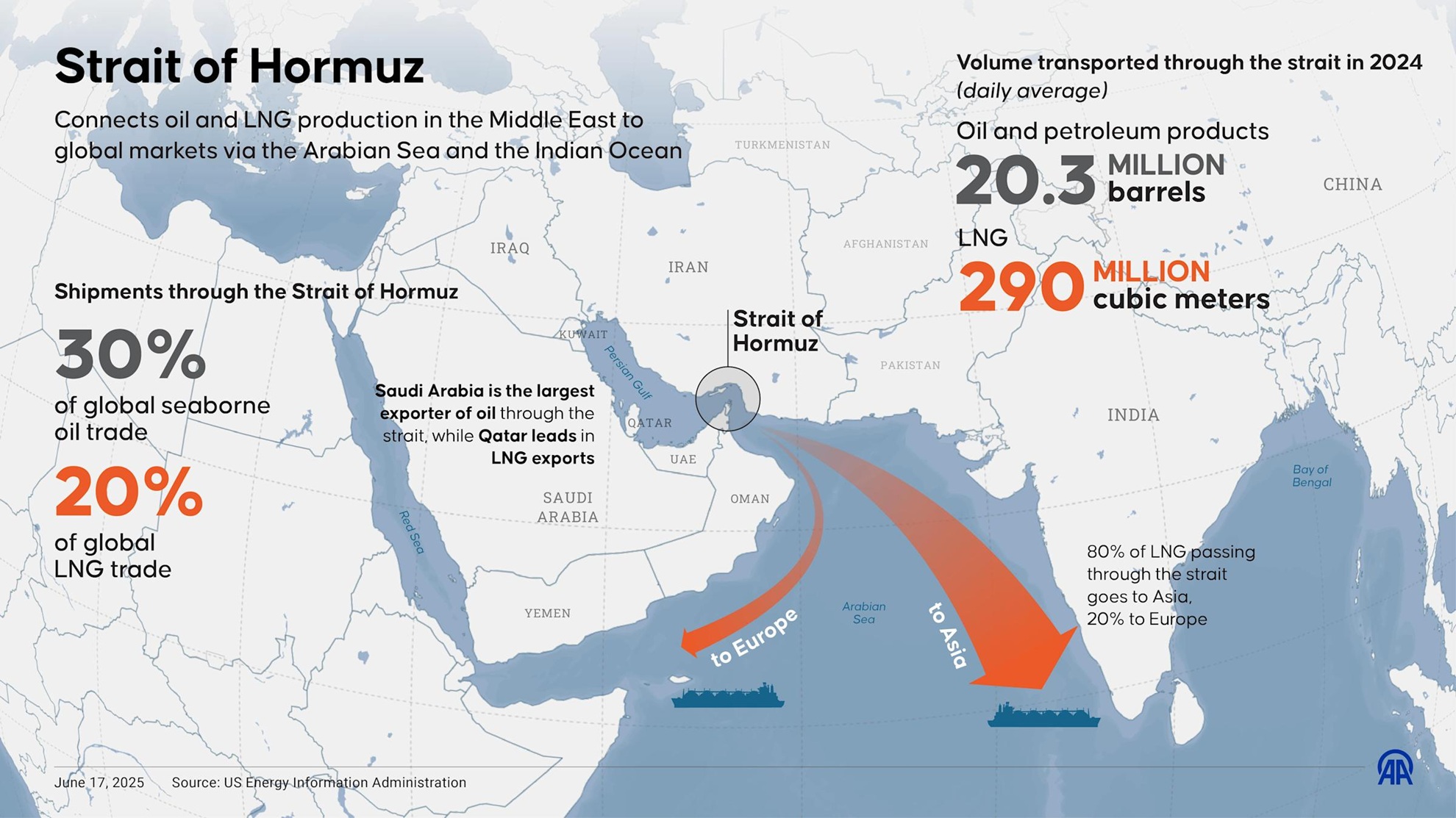
- Around 20 million barrels per day (bpd) of oil and petroleum products normally pass through the Strait of Hormuz between Iran and Oman, equal to about one-fifth of global oil consumption and roughly 30% of global seaborne oil trade.
- This is a flow shock, not an inventory problem. Oil markets depend on continuous throughput, not static storage.
- If the disruption persists beyond a few weeks, Brent could shift from a short-term spike to a broader price shock, with stagflation risk.
- Tanker traffic through the strait fell from around 135 ships per day to fewer than 15 at the peak of disruption, a reduction of approximately 85%, with more than 150 vessels anchored, diverted, or delayed.
- A two-week ceasefire was announced on 8 April, with 45-day truce negotiations under way. Iran has separately signalled a demand for transit fees on vessels using the strait, which, if formalised, would represent a permanent geopolitical floor on energy costs.
- Markets have begun rotating away from growth and technology exposure toward energy and defence names, reflecting a view that elevated oil is becoming a structural cost rather than a temporary risk premium.
The world’s most critical oil chokepoint
The Strait of Hormuz handles roughly 20 million barrels per day of oil and petroleum products, equal to about 20% of global oil consumption and around 30% of global seaborne oil trade. With global oil demand near 104 million bpd and spare capacity limited, the market was already tightly balanced before the latest escalation.
The strait is also a critical corridor for liquefied natural gas. Around 290 million cubic metres of LNG transited the route each day on average in 2024, representing roughly 20% of global LNG trade, with Asian markets the main destination.
The International Energy Agency (IEA) has described Hormuz as the world’s most important oil transit chokepoint, noting that even partial interruptions may trigger outsized price moves. Brent crude has moved above US$100 a barrel, reflecting both physical tightness and a rising geopolitical risk premium.

Tankers idle as flows slow
Shipping and insurance data now point to strain in real time. More than 85 large crude carriers are reported to be stranded in the Persian Gulf, while more than 150 vessels have been anchored, diverted or delayed as operators reassess safety and insurance cover. That would leave an estimated 120 million to 150 million barrels of crude sitting idle at sea.
Those volumes represent only six to seven days of normal Hormuz throughput, or a little more than one day of global oil consumption.
Updated shipping and insurance data now confirm more than 150 vessels have been anchored, diverted, or delayed, up from the 85 initially reported. The 1.3 days of global consumption coverage from idle crude remains the binding constraint: this is a flow shock, not a storage problem, and the ceasefire has not yet translated into meaningfully restored throughput.
A market built on flow, not storage
Oil markets function on continuous movement. Refineries, petrochemical plants and global supply chains are calibrated to steady deliveries along predictable sea lanes. When flows through a chokepoint that carries roughly one-fifth of global oil consumption and around 30% of global seaborne oil trade are interrupted, the system can move from equilibrium to deficit within days.
Spare production capacity, largely concentrated within OPEC, is estimated at only 3 million to 5 million bpd. That falls well short of the volumes at risk if Hormuz flows are severely disrupted.
Inflation risks and macro spillovers
The inflationary impact of an oil shock typically arrives in waves. Higher fuel and energy prices may lift headline inflation quickly as petrol, diesel and power costs move higher.
Over time, higher energy costs may pass through freight, food, manufacturing and services. If the disruption persists, the combination of elevated inflation and slower growth could raise the risk of a stagflationary environment and leave central banks facing a difficult trade-off.
No easy offset, a system with little slack
What makes the current episode particularly acute is the lack of slack in the global system.
Global supply and demand near 103 million to 104 million bpd leave little spare cushion when a chokepoint handling nearly 20 million bpd, or about one-fifth of global oil consumption, is compromised. Estimated spare capacity of 3 million to 5 million bpd, mostly within OPEC, would cover only a fraction of the volumes at risk.
Alternative routes, including pipelines that bypass Hormuz and rerouted shipping, can only partly offset lost flows, and usually at higher cost and with longer lead times.
Bottom line
Until transit through the Strait of Hormuz is restored and seen as credibly secure, global oil flows are likely to remain impaired and risk premia elevated. For investors, policymakers and corporate decision-makers, the core question is whether oil can move where it needs to go, every day, without interruption.