
Market news & insights
Stay ahead of the markets with expert insights, news, and technical analysis to guide your trading decisions.

The 8 April ceasefire announcement and parallel discussions around a 45-day truce have not resolved the Strait of Hormuz disruption. They have, for now, capped the worst-case scenario, but tanker traffic remains at a fraction of normal levels and Iran's demand for transit fees signals a structural shift, not a temporary one.
What began as a regional conflict has become a global energy shock, and the question for markets is no longer whether Hormuz was disrupted, but how permanently the disruption changes the pricing floor for oil.
Key takeaways
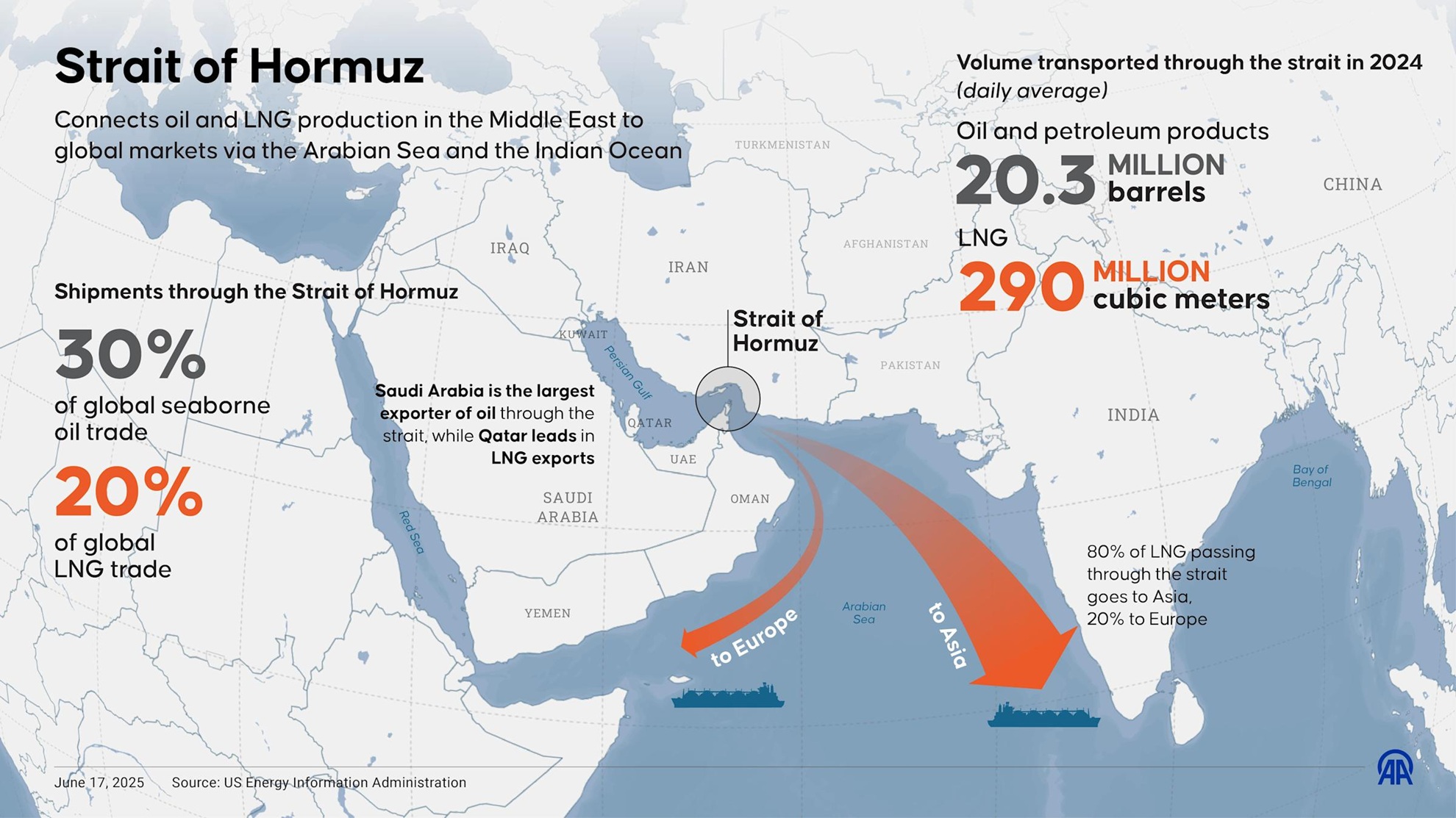
- Around 20 million barrels per day (bpd) of oil and petroleum products normally pass through the Strait of Hormuz between Iran and Oman, equal to about one-fifth of global oil consumption and roughly 30% of global seaborne oil trade.
- This is a flow shock, not an inventory problem. Oil markets depend on continuous throughput, not static storage.
- If the disruption persists beyond a few weeks, Brent could shift from a short-term spike to a broader price shock, with stagflation risk.
- Tanker traffic through the strait fell from around 135 ships per day to fewer than 15 at the peak of disruption, a reduction of approximately 85%, with more than 150 vessels anchored, diverted, or delayed.
- A two-week ceasefire was announced on 8 April, with 45-day truce negotiations under way. Iran has separately signalled a demand for transit fees on vessels using the strait, which, if formalised, would represent a permanent geopolitical floor on energy costs.
- Markets have begun rotating away from growth and technology exposure toward energy and defence names, reflecting a view that elevated oil is becoming a structural cost rather than a temporary risk premium.
The world’s most critical oil chokepoint
The Strait of Hormuz handles roughly 20 million barrels per day of oil and petroleum products, equal to about 20% of global oil consumption and around 30% of global seaborne oil trade. With global oil demand near 104 million bpd and spare capacity limited, the market was already tightly balanced before the latest escalation.
The strait is also a critical corridor for liquefied natural gas. Around 290 million cubic metres of LNG transited the route each day on average in 2024, representing roughly 20% of global LNG trade, with Asian markets the main destination.
The International Energy Agency (IEA) has described Hormuz as the world’s most important oil transit chokepoint, noting that even partial interruptions may trigger outsized price moves. Brent crude has moved above US$100 a barrel, reflecting both physical tightness and a rising geopolitical risk premium.
Tankers idle as flows slow
Shipping and insurance data now point to strain in real time. More than 85 large crude carriers are reported to be stranded in the Persian Gulf, while more than 150 vessels have been anchored, diverted or delayed as operators reassess safety and insurance cover. That would leave an estimated 120 million to 150 million barrels of crude sitting idle at sea.
Those volumes represent only six to seven days of normal Hormuz throughput, or a little more than one day of global oil consumption.
Updated shipping and insurance data now confirm more than 150 vessels have been anchored, diverted, or delayed, up from the 85 initially reported. The 1.3 days of global consumption coverage from idle crude remains the binding constraint: this is a flow shock, not a storage problem, and the ceasefire has not yet translated into meaningfully restored throughput.
A market built on flow, not storage
Oil markets function on continuous movement. Refineries, petrochemical plants and global supply chains are calibrated to steady deliveries along predictable sea lanes. When flows through a chokepoint that carries roughly one-fifth of global oil consumption and around 30% of global seaborne oil trade are interrupted, the system can move from equilibrium to deficit within days.
Spare production capacity, largely concentrated within OPEC, is estimated at only 3 million to 5 million bpd. That falls well short of the volumes at risk if Hormuz flows are severely disrupted.
Oil market analysis
How long do idle tankers last?
135M idle barrels — days of cover against each demand benchmark

vs. Strait of Hormuz daily flow (20M bbl/day)
vs. Global oil consumption (104M bbl/day)
vs. US Strategic Petroleum Reserve release (1M bbl/day)
135M
idle barrels on tankers (midpoint of 120–150M range)
~33%
of daily Hormuz flow that is idle storage, not transit
<31 hrs
is all idle storage against global daily consumption
Inflation risks and macro spillovers
The inflationary impact of an oil shock typically arrives in waves. Higher fuel and energy prices may lift headline inflation quickly as petrol, diesel and power costs move higher.
Over time, higher energy costs may pass through freight, food, manufacturing and services. If the disruption persists, the combination of elevated inflation and slower growth could raise the risk of a stagflationary environment and leave central banks facing a difficult trade-off.
No easy offset, a system with little slack
What makes the current episode particularly acute is the lack of slack in the global system.
Global supply and demand near 103 million to 104 million bpd leave little spare cushion when a chokepoint handling nearly 20 million bpd, or about one-fifth of global oil consumption, is compromised. Estimated spare capacity of 3 million to 5 million bpd, mostly within OPEC, would cover only a fraction of the volumes at risk.
Alternative routes, including pipelines that bypass Hormuz and rerouted shipping, can only partly offset lost flows, and usually at higher cost and with longer lead times.
Bottom line
Until transit through the Strait of Hormuz is restored and seen as credibly secure, global oil flows are likely to remain impaired and risk premia elevated. For investors, policymakers and corporate decision-makers, the core question is whether oil can move where it needs to go, every day, without interruption.


What is going on with Taiwan? Taiwan is back in the news after US speaker of the house Nancy Pelosi visited the country causing a fiery reaction from the mainland of China. Historical background In order to understand the causes of the China/Taiwan tension, some historical perspective is needed.
The current tension stems from the Chinese civil war 1927 – 1949 where Mao Zedong’s Communist army and Chiang Kai- Shek’s Republic of China army fought in a series of intermittent battles to secure control of mainland China. As the Communist army began to gain ascendancy, Chiang Kai–Shek and the Republic of China movement was forced into exile to Taiwan. Since this exile and lasting until today, a long-standing military and political standoff has been in place between the two countries with each claiming to be the rightful controller of China.
In recent years, China has attempted to expand its influence and places such as Hong Kong have seen Beijing challenge its sovereignty the pressure has been building on Taiwan. At times of increased tension, China has conducted military exercises in the Taiwan Strait to act as a ‘warning’ to Taiwan and the West that it may be treading too close to China’s political interests. Current Day Events Nancy Pelosi became the first US speaker of the House to visit Taiwan in more than 25 years.
The visit by Pelosi, whilst not necessarily threatening is an act that supports the legitimacy of Taiwan as a democratic, sovereign government. Pelosi challenged the essence of China’s communist regime and stated, “Today the world faces a choice between democracy and autocracy.” However, the speaker did not go as far as to offer any specific military support to protect against an aggressive response from the CCP.. Any act of economic or military support has the potential to draw an aggressive response from the CCP.
Why does this matter? Traders and investors do not have to look too far to see what can happen to the market if geopolitical conflict breaks out. It is still only a few months on since the Russia and Ukraine conflict broke out.
After the initial invasions, commodity prices soared as sanctions were placed on Russia and supply chains were placed under pressure. The market is still trying to adjust to these consequences today. In addition, the Ruble took a huge hit and Moscow Exchange had to be closed as countries placed sanctions on Russia and its monetary system.
If China was to invade Taiwan it is reasonable to expect economic sanctions will follow. With China being such a huge player in the global supply chain, it may have a larger effect on commodity prices. The Ukraine conflict showed the world how fragile global supply chains can be when conflict strikes.
Specifically, Gas, Grain, Oil rocketed in price. Regarding Taiwan and China, a large portion of the world semi- conductors are produced in Taiwan which means that there could be disastrous consequences that may ensure should war breakout. A more detailed discussion on the impact that a shortage of semiconductors may have can be found below. https://www.gomarkets.com/au/articles/economic-updates/semi-conductor-supply-crunch/ Similarly, the Yuan may take a hit with any kind of escalation in conflict.
Therefore, traders should be aware of the conflict and ongoing tensions as trading opportunities may eventuate. The USDCNH can be traded on Go Markets platforms.

Walmart tops expectations for Q2 – the stock is up Walmart Inc. (WMT) announced its Q2 financial results before the market open on Wall Street on Tuesday. World’s largest supermarket chain reported results that exceeded analyst expectations, sending the stock price higher. The company reported revenue of $152.859 billion (up by 8.4% year-over-year) vs. $150.994 billion expected.
Earnings per share reported at $1.77 per share for the quarter vs. $1.62 per share estimate. Doug McMillon, President and CEO of Walmart commented on the latest results: ''We’re pleased to see more customers choosing Walmart during this inflationary period, and we’re working hard to support them as they prioritize their spending. The actions we’ve taken to improve inventory levels in the U.S., along with a heavier mix of sales in grocery put pressure on profit margin for Q2 and our outlook for the year.
We made good progress throughout the quarter operationally to improve costs in our supply chain, and that work is ongoing. We continue to build on our strategy to expand our digital businesses, including the continued strength we see in our international markets.'' Walmart Inc. (WMT) chart The stock was up by over 6% on Tuesday, trading at $140.233 a share. Here is how the stock has performed in the past year: 1 Month +8.62% 3 Month +7.14% Year-to-date -2.74% 1 Year -6.62% Walmart price targets Deutsche Bank $142 Raymond James $140 BMO Capital $160 Cowen & Co. $150 Morgan Stanley $145 UBS $152 Credit Suisse $133 Wells Fargo $130 Walmart is the 14 th largest company in the world with a market cap of $383.98 billion.
You can trade Walmart Inc. (WMT) and many other stocks from the NYSE, NASDAQ, HKEX and the ASX with GO Markets as a Share CFD. Sources: Walmart Inc., TradingView, MetaTrader 5, Benzinga, CompaniesMarketCap

The USDJPY has been in an extremely strong upward trend since September 2021. This pair's recent price action has also been charactarised by relatively weak retracements as it has trended higher. Inflationary pressures have acted as a strong catalyst for the USD against most other currencies further aided by the Federal Reserve taking a strong stance against inflation with a series of aggressive interest rate hikes.
At the same time, the JPY has remained weak as the Central Bank of Japan has refused to intervene and shift from its dovish stance. The most recent retracement shows the potential for a good risk/reward Long trade. On the chart, it can be seen that the price has pulled back to the 23.60% Fibonacci level, which is at 132/133JPY.
This area also doubles as a support zone with the prior resistance level becoming a level of support which is another sign that the trend may continue. On the weekly chart, the characteristics of the candlesticks near the support zone also support the premise that the price may bounce. The candles have long wicks touching the support area indicating that the buyers are soaking up the supply.
They have also closed near their opening price again showing how buyers are soaking up the supply. The 4-hour chart shows a consolidation of the price forming a triangle, with the potential to break out to the upside. This may provide an alternative entry signal for the same overall strategy.
An important aspect to remember when trading this strategy is to ensure that price occurs with relatively high volume. Large volume indicates that buyers are regaining control over the price, and that sellers have become exhausted. Potential risks There are some risks with this trade.
Firstly, the pair is already quite overextended with the price at multi-decade highs. In addition, with US inflation fears potentially easing and interest rate hikes priced in already, the current price may be near its peak.

USDJPY ready to bounce or retrace further. The USDJPY has been recently provided great buying opportunities for traders. However, in recent days it has posted its largest drop since beginning the current upward at the beginning of January 2021.
The question remains, is this just a standard retracement or is it a symbol of a much bigger reversal. In the last few months, the USD has risen sharply as the market has responded to inflation fears and geopolitical events. With inflation levels at record levels across much of the developed world many Central Banks have shifted to a hawkish stance regarding their monetary policy with the USA being a prime example of this.
On the contrary, the Central Bank of Japan has remained dovish almost acting as a lone solider compared to other countries in this regard. Despite this, as bond yields have begun to settle down and the market has begun to price in recession fears and inflation, the YEN has become attractive again. Technical Analysis Looking at the technical elements of the chart, the price is down from the multi decade highs of 139 that it reached in the middle of July.
Importantly the price has also dropped below the most recent support level. In addition, the price has also breached the 50-day moving average. The question that remains is whether this is a simple retracement or the signs of a reversal occurring.
There are two characteristics of this price action that support the potential bounce back to the upside for this currency pair. Firstly, on the daily, chart, although the price did break through the initial first level of support it is currently holding the next stronger level down at 131/132. In addition, looking at the weekly chart, the price is showing a relatively strong bounce off the same 131/132 zone.
This multi timeframe analysis, further supports the continuation of the upward trend of the pair. The midterm buy target may be a retest of the 140 level. There is a large risk with this trade.
If the ‘Top’ is indeed ‘in’ and the pair does start to falter, then there is risk of massive selling. This is because the pair is already so overextended to the buy side. In addition, a rush to close Yen short positions may further accelerate the move back downward.
If this does occur and the 130 level breaks it may see the price fall to the 125 level. The short-term future of the pair will still likely be determined by short term economic news and activity within both Japan and the USA.
US economic data revealed last night shows that the country’s GDP has shrunk by 0.9%, although some are remaining positive that a recession may still be avoided. Despite the worrying figures, Federal Reserve Chair, Jerome Powell, outlined his belief that due to low unemployment figures of 3.6% and a strong market for jobs with 11 million job openings that there may be a 'soft landing'. Joe Biden commented, “It’s no surprise that the economy is slowing down as the Federal Reserve acts to bring down inflation.” More US CPI data is expected to be announced tonight.
In response to the GDP figure, the US indices had another green day with the Dow Jones, the Nasdaq, and the S&P500 all rising 1.03%, 1.08%, and 1.21% respectively. In terms of share price movement, Meta’s stock price dipped 5.22% as it posted its first-ever quarterly drop in revenue, signaling how interest rate hikes have been impacting growth companies. The data also followed through to the Australian market with the yield on 3-year government bonds falling to 3.1%.
The ASX200 also continued its momentum for the week as it pushed higher again on Thursday. Brent Crude Oil had a mixed day ending the day flat at $107.58. Gold continued to bounce off its support zone and climbed up 1.25% and Natural Gas fell 4.66% as it continues to pull back from its recent highs dropping 4.66%.
FOREX and Cryptocurrency The USD dropped sharply as the GDP figures were announced. It recovered briefly, before selling back down, closing towards the lowest price of the day, a total drop of 0.28%. Bitcoin and Ethereum also gained momentum as money continued to flow back into risk assets, with the latter jumping to its highest level since the middle of July.
ETHUSD closed at $1726 and Bitcoin at $23,860.

Salesforce.com Inc. (CRM) reported its fourth-quarter earnings results after the closing bell over Wall Street today – surpassing analyst expectations. World’s leading customer relationship management (CRM) company reported revenue of $7.326 billion (an increase of 26% year-over-year) vs. $7.242 billion expected. Earnings per share reported at $0.84 a share vs. $0.75 a share expected. ''We had another phenomenal quarter and full-year of financial results,'' Marc Benioff, Chair and Co-CEO of Salesforce said following the latest results. ''As we continue to see tremendous demand from customers, we’re raising our FY23 re venue guidance to $32.1 billion at the high-end of range, with non-GAAP operating margin of 20%, and operating cash flow growth of 22% year-over-year,'' Benioff continued.
Bret Taylor, Co-CEO of Salesforce, also commented on the strong financial results: ''With our customers’ success driving our financial success, we’re generating disciplined, profitable growth at scale quarter after quarter.'' ''Our Customer 360 platform has never been more strategic or relevant in driving the growth and resilience of our customers around the world.'' Salesforce.com Inc. (CRM) Share price of Salesforce was little changed at the end of the trading day on Wall Street Tuesday, down by 0.78% at $208.36 per share. Here is how the stock has performed in the past year – 1 Month: -10.01% 3 Month: -26.69% Year-to-date: -17.80% 1 Year: -2.15% Salesforce.com Inc. is the 51 st largest company in the world with total market cap of $205.75 billion. You can trade Salesforce.com Inc. (CRM) and many other stocks from the NYSE, NASDAQ, HKEX and the ASX with GO Markets as a Share CFD.
Sources: Salesforce.com Inc., TradingView, MetaTrader 5, CompaniesMarketCap