
Noticias del mercado & perspectivas
Anticípate a los mercados con perspectivas de expertos, noticias y análisis técnico para guiar tus decisiones de trading.

El anuncio del alto el fuego del 8 de abril y las discusiones paralelas en torno a una tregua de 45 días no han resuelto la interrupción del Estrecho de Ormuz. Por ahora, han puesto un tope al peor escenario posible, pero el tráfico de petroleros se mantiene en una fracción de los niveles normales y la demanda iraní de tarifas de tránsito señala un cambio estructural, no temporal.
Lo que comenzó como un conflicto regional se ha convertido en un shock energético global, y la pregunta para los mercados ya no es si Ormuz fue interrumpido, sino cómo permanentemente la interrupción cambia el piso de precios para el petróleo.
Puntos clave
- Alrededor de 20 millones de barriles por día (bpd) de petróleo y productos derivados del petróleo normalmente pasan por el Estrecho de Ormuz entre Irán y Omán, lo que equivale a aproximadamente una quinta parte del consumo mundial de petróleo y aproximadamente el 30% del comercio mundial de petróleo marítimo.
- Esto es un choque de flujo, no un problema de inventario. Los mercados petroleros dependen del rendimiento continuo, no del almacenamiento de información estático.
- Si la interrupción persiste más allá de unas pocas semanas, el Brent podría pasar de un pico a corto plazo a un shock de precios más amplio, con riesgo de estanflación.
- El tráfico de petroleros a través del estrecho cayó de alrededor de 135 barcos por día a menos de 15 en el pico de interrupción, una reducción de aproximadamente 85%, con más de 150 embarcaciones ancladas, desviadas o retrasadas.
- El 8 de abril se anunció un alto el fuego de dos semanas, con negociaciones de tregua de 45 días en curso. Irán ha señalado por separado una demanda de tarifas de tránsito para los buques que utilizan el estrecho, lo que, de formalizar, representaría un piso geopolítico permanente en los costos de energía.
- Los mercados han comenzado a alejarse del crecimiento y la exposición tecnológica hacia los nombres de energía y defensa, lo que refleja la opinión de que el petróleo elevado se está convirtiendo en un costo estructural en lugar de una prima de riesgo temporal.
El punto de choque petrolero más crítico del mundo
El Estrecho de Ormuz maneja aproximadamente 20 millones de barriles diarios de petróleo y productos derivados del petróleo, lo que equivale a alrededor del 20% del consumo mundial de petróleo y alrededor del 30% del comercio mundial de petróleo marítimo. Con la demanda mundial de petróleo cercana a los 104 millones de bpd y la capacidad sobrante limitada, el mercado ya estaba fuertemente equilibrado antes de la última escalada.
El estrecho también es un corredor crítico para el gas natural licuado. Alrededor de 290 millones de metros cúbicos de GNL transitaron por la ruta cada día en promedio en 2024, lo que representa aproximadamente el 20% del comercio mundial de GNL, siendo los mercados asiáticos el principal destino.
La Agencia Internacional de Energía (AIE) ha descrito a Ormuz como el punto de choque del tránsito petrolero más importante del mundo, señalando que incluso las interrupciones parciales pueden desencadenar movimientos desmedidos de precios. El crudo Brent se ha movido por encima de los 100 dólares el barril, lo que refleja tanto la estanqueidad física como una prima de riesgo geopolítico al alza.
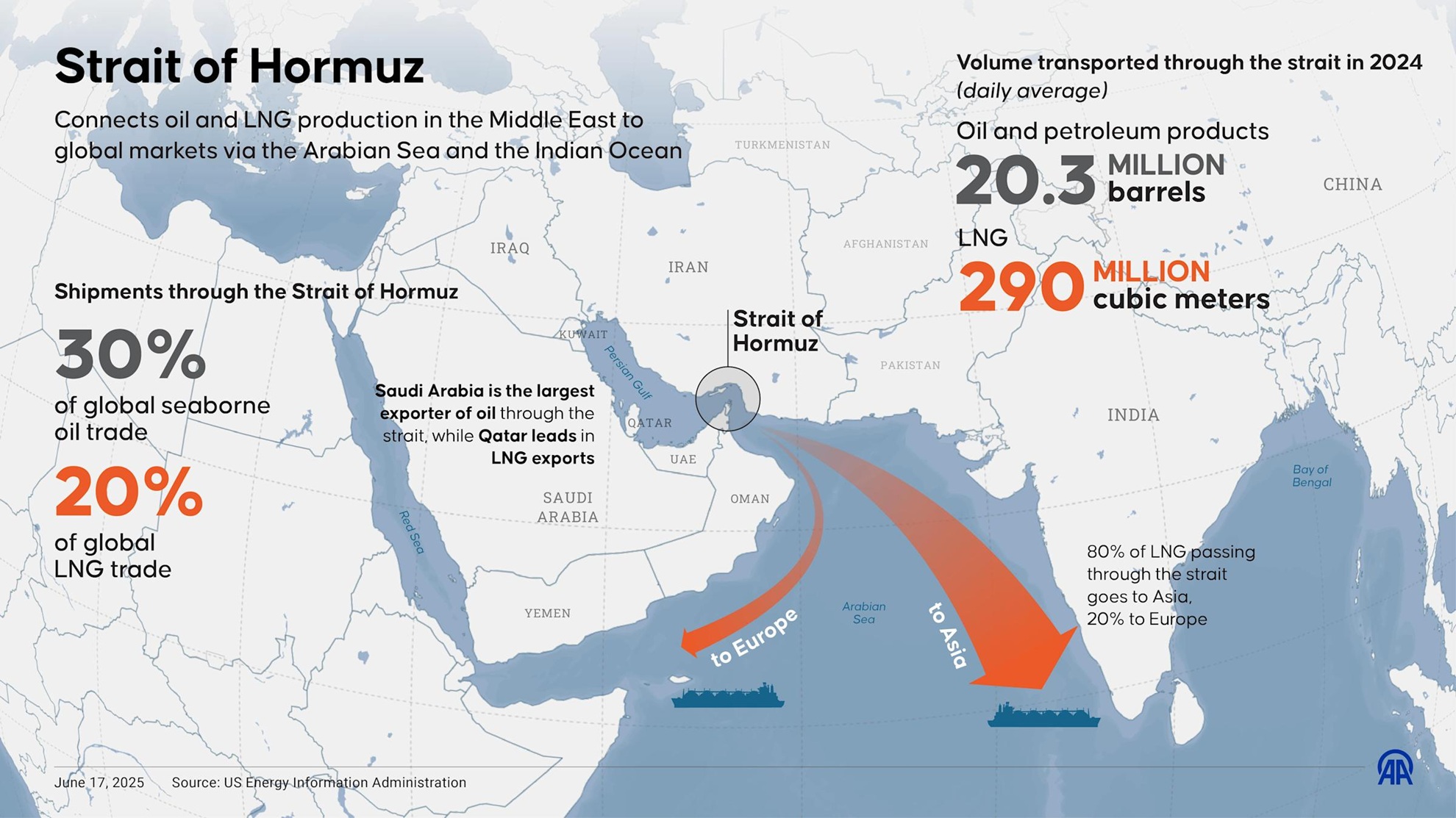
Tanques inactivos a medida que los flujos son lentos
Los datos de envío y seguros ahora apuntan a tensión en tiempo real. Se informa que más de 85 grandes transportistas de crudo están varados en el Golfo Pérsico, mientras que más de 150 embarcaciones han sido ancladas, desviadas o retrasadas a medida que los operadores reevalúan la cobertura de seguridad y seguros. Eso dejaría un estimado de 120 millones a 150 millones de barriles de crudo inactivos en el mar.
Esos volúmenes representan solo de seis a siete días de rendimiento normal de Hormuz, o un poco más de un día de consumo mundial de petróleo.
Los datos actualizados de envío y seguros confirman ahora que más de 150 embarcaciones han sido ancladas, desviadas o retrasadas, por encima de las 85 reportadas inicialmente. Los 1.3 días de cobertura de consumo mundial del crudo inactivo siguen siendo la limitación vinculante: se trata de un shock de flujo, no un problema de almacenamiento, y el alto el fuego aún no se ha traducido en un rendimiento restaurado de manera significativa.
Un mercado basado en el flujo, no en el almacenamiento de información
Los mercados petroleros funcionan en movimiento continuo. Las refinerías, las plantas petroquímicas y las cadenas de suministro mundiales están calibradas para lograr entregas estables a lo largo de rutas marítimas predecibles. Cuando los flujos a través de un punto de choque que lleva aproximadamente una quinta parte del consumo mundial de petróleo y alrededor del 30% del comercio mundial de petróleo marítimo se interrumpen, el sistema puede pasar del equilibrio al déficit en cuestión de días.
La capacidad de producción sobrante, concentrada en gran medida dentro de la OPEP, se estima en sólo 3 millones a 5 millones de bpd. Eso queda muy por debajo de los volúmenes en riesgo si los flujos de Ormuz se ven gravemente perturbados.
Oil market analysis
How long do idle tankers last?
135M idle barrels — days of cover against each demand benchmark

vs. Strait of Hormuz daily flow (20M bbl/day)
vs. Global oil consumption (104M bbl/day)
vs. US Strategic Petroleum Reserve release (1M bbl/day)
135M
idle barrels on tankers (midpoint of 120–150M range)
~33%
of daily Hormuz flow that is idle storage, not transit
<31 hrs
is all idle storage against global daily consumption
Riesgos de inflación y macroderrames
El impacto inflacionario de un choque petrolero suele llegar en oleadas. Los precios más altos del combustible y la energía pueden elevar rápidamente la inflación general a medida que los costos de gasolina, diésel y energía se muevan al alza.
Con el tiempo, los mayores costos de energía pueden pasar por fletes, alimentos, manufactura y servicios. Si la perturbación persiste, la combinación de una inflación elevada y un crecimiento más lento podría elevar el riesgo de un entorno estanflacionario y dejar a los bancos centrales enfrentando una difícil compensación.
Sin compensación fácil, un sistema con poca holgura
Lo que hace que el episodio actual sea particularmente agudo es la falta de holgura en el sistema global.
La oferta y la demanda mundiales cerca de 103 millones a 104 millones de bpd dejan poco colchón de sobra cuando un punto de choque que maneja casi 20 millones de bpd, o cerca de una quinta parte del consumo mundial de petróleo, se ve comprometido. La capacidad sobrante estimada de 3 millones a 5 millones de bpd, en su mayoría dentro de la OPEP, cubriría sólo una fracción de los volúmenes en riesgo.
Las rutas alternativas, incluidas las tuberías que eluden Ormuz y el envío reencaminado, solo pueden compensar parcialmente los flujos perdidos, y generalmente a un costo más alto y con plazos de entrega más largos.
Conclusión
Hasta que se restablezca el tránsito por el Estrecho de Ormuz y se vea como creíblemente seguro, es probable que los flujos mundiales de petróleo sigan deteriorados y las primas de riesgo sean elevadas. Para los inversionistas, los formuladores de políticas y los tomadores de decisiones corporativas, la pregunta central es si el petróleo puede moverse hacia donde necesita ir, todos los días, sin interrupción.

USD surged higher on Thursday, with DXY having its second biggest daily gain since March, reclaiming the big figure at 106 and holding above its trendline support. Hotter than expected CPI readings with the M/M rising 0.4% (exp. 0.3%) and Y/Y coming in at 3.7%, above the 3.6% consensus got the Dollar rally going, but a dismal US 30yr auction later in the session saw long end yields surging higher, further boosting the Greenback. Cyclical currencies AUD, NZD and GBP were the underperformers, driven lower by a sour risk sentiment and USD strength rather than anything currency specific.
AUDUSD and NZDUSD tumbling to 1-week lows and nearing the bottoms of their recent ranges of 0.6308 and 0.5926, respectively, from earlier peaks near the top of the range of 0.6430 and 0.6025. GBPUSD also tumbled, breaking below 1.2200 amid the aforementioned negative risk sentiment and surging USD. There were some mixed UK macro releases and BoE members highlighting the extent of possible rate hikes to come but this had little effect as GBPUSD fell to a session low of 1.2173 a whisker above Monday’s low of 1.2163.
Gold finished the session down but considering USD strength and surging yields held up admirably as haven flows helped lessen the damage. XAUUSD also finding some support at the 78.6 Fib level at 1866. Today’s calendar is fairly light, Chinese CPI and US consumer sentiment being the highlights.

The ongoing sell-off in the US bond market has set the tone in FX and wider risk markets on Tuesday in an otherwise very slow news day. The USD has continued to grind higher against the higher yield backdrop with the US Dollar Index (DXY) adding to Mondays gains pushing above the 106 level, tracking yields higher. The Fed’s recent “higher for longer” statement still supporting yields, worries of a US government shutdown looming and more hawkish comments from the Fed’s Kashkari on Monday also giving a tailwind to yields and the US dollar.
EURUSD saw further declines, first breaking support at the May 31 swing low, before also dropping below the psychological 1.06 level, with the major support of the Jan/Feb/Mar lows at 1.0521 very much in play. USD strength was the main driver but also weighing on the EUR was weak world merchandise trade volumes data, the eurozone suffers from a declining trade environment, as does the Euro. GBPUSD also continued to decline after last week’s surprise hold from the Bank of England.
Ongoing USD strength, another hit to the cyclical GBP is the softening risk sentiment in global markets amid a possible US government shutdown. GBPUSD breaching the 1.22 support level and looking little in the way of technical support levels can be expected before the 1.2000/2075 area. USDJPY stalled from its recent grind higher after climbing just shy of the 149.00 handle, another round of the familiar jawboning from Japan’s Finance Minister Suzuki holding it in place for now, JPY also helped somewhat by the weakening risk environment seeing haven flows to the Yen.
The USD sell off continued Thursday moving in lockstep with yields again ahead of today’s key non-farm payroll figure. Unemployment claims came inline and had a limited impact as it was yields driving action in the USD. DXY dropped to close at the lows of 106.32 from earlier highs of 106.86.
So far this looks like a technical pullback from overbought levels, with a strong support at the lower trendline around 106.10 as traders turn to watch todays NFP figure. EUR was propped up once again by USD weakness, with EURUSD testing the key support at 1.05 several times before rallying to hit a high of 1.0558. ECB members de Guindos and Kazimir spoke, with the former saying the current level of rates will help tame inflation, but noted the ECB is data dependent and it is premature to discuss rate cuts.
While Kazimir noted that the September EZ core inflation confirmed ECB expectations, and reiterated he believes the last rate hike was the final one. JPY firmed against the USD with USDJPY dropping below 149.00 led by the softening of US Treasury yields. Traders seemingly still wary of a push above 150.00 seeing potential Yen intervention following the “flash crash” on Tuesday when the pair poked above this level.
AUD and NZD were bid with outperformance in both currencies, bolstered by the improved risk sentiment and lower US yields. AUDUSD rose above 0.6350 and NZDUSD rose above 0.5950, the Kiwi marginally outperforming the Aussie seeing the AUDNZD cross rate drop below 1.07 again, the pair has found some short-term resistance at the 1.07 level this week with cross make a few attempts to break and hold but so far being rejected. Today’s calendar is dominated by the always exciting NFP, a hot figure here will test the markets pricing of interest rates and should see the yield/USD rally recommence.
EURUSD is once again at an interesting technical level coming into key US data this week. After holding firm in a rising channel for most of 2023, price fell away in early September. This coincided with the price also falling below the 200 SMA which also acted as support multiple times in 2023 so far.
After bouncing nicely on the first horizontal support zone, we saw this level fail last week. A couple of days of positive trading sees price back up at this key zone, where we will be waiting to see if that horizontal support flips to resistance to bounce price back south and continue the downward trend. With the US interest rate decision out on Wednesday, we could be in for some volatility on this pair.
The market is currently predicting a 99% change of a continued pause, keeping rates at 5.5%. Any deviation from this is likely to cause some big movements in the USD, and this pair. With mixed inflation data out lately and oil prices soaring, this will be an important decision for the US Fed.
If the 1% probability occurs and the Fed hikes rate, this will likely see strength form in the dollar. With price currently at some key technical levels going into big economic data, it could be an interesting trading period for EURUSD this week.

EURUSD is heading into today’s knife-edge ECB rate decision lacking any real direction after Wednesdays CPI inspired choppy performance. Markets are split on today’s ECB rate decision with money markets pricing around a 65% chance of a 25bps rate hike, but a slight majority of economists polled by Bloomberg expecting a hold. Against this backdrop traders seem to be taking a wait and see approach with EURUSD unchanged, trading in a tight range in Thursdays APAC session and so far in EU session.
This will change at 12:15pm GMT as the ECB announces its rate decision, with a split market there will be almost certain volatility in EURUSD whichever way the ECB goes, with markets pricing in a 65% chance of a hike the risk on balance does seem skewed to the downside for EURUSD. A lot will also depend on the guidance released with the rate decision and the press conference 30 minutes after. No hike and a statement anything less than ultra hawkish will likely see a sharp drop in EURUSD initially, possibly testing the June and September lows support zone just under 1.07.
This will be a key area to watch after the initial reaction. A Hike of 25bp will likely see an initial pop in EURUSD, but attention will then turn to the statement. The ECB is expected to stick with the data dependent narrative as to its future moves, but it will be hints of possible further hikes (hawkish) or hints that they may be at the peak (dovish) which will likely drive the Euro once the initial reaction is done.
Even if we get the 25bp hike today money markets are pricing in 23bp of hikes this year already, this should cap any sustained rise in the Euro after a likely initial spike higher unless the statement hints strongly of more to come, which against a backdrop of a slowing EU economy seems unlikely. The key level to watch to the upside is the psychological 1.08 level, which would also bring EURUSD up to its trendline resistance and would see hard going for further gains unless at a technical perspective. The ECB rate decision will be released at 12:15 GMT with the presser at 12:45 GMT.

WTI Crude oil got off to a flyer on Monday open as news broke of conflict in the Middle East saw a hefty risk premium being priced in fueled by fears of supply disruptions. It seems some of those fears have abated and along with a massive crude inventory build of almost 13mm barrels reported by API on Wednesday, a classic gap fill chart pattern has formed on USOUSD after a steep drop, with USOUSD currently trading at 83.37, down markedly from the conflict spike high of 87.65 in Monday’s session. Geopolitical risk will be very much at the forefront of Oil traders’ minds with an escalation and/or expansion of the current conflict very much having the ability to cause high volatility in oil, we do also have some important technical levels and scheduled economic announcements to watch for the remainder of the week’s trading.
Chart Technicals: Monday’s gap open found resistance at the upward trend line, which up until early October has been a significant support level, to the upside this will be the next technical level to watch, around the 87.225 zone, a retake of this trendline support could then see USOUSD next testing the 23.6 fib level at 88.958 which had also offered support during September. To the downside Fridays low and the nearby 50% fib level at 81.333 will be the first major technical level, a break of this support zone will indicate a possible leg down to the 61.8 fib level around 76.867, which was also a swing low support level back in August. Along with further updates from the Middle East, tonight’s US CPI figure will also be important to watch, a low reading will cheer market participants that are banking on a less aggressive Federal Reserve, this will likely see risk assets rally, and Oil along with them as a less aggressive Fed will take the shackles off the US economy and have oil repricing for a more robust demand.