The US Dollar Index (DXY) is a popular tool used by forex traders to assess the value of the US dollar relative to a basket of other major currencies. The DXY is calculated using the weighted average of six major currencies: the euro, yen, pound sterling, Canadian dollar, Swedish krona, and Swiss franc. To use the DXY to trade forex, you can follow these steps: 1.
Monitor the DXY: Keep an eye on the movements of the DXY to get a sense of the overall strength or weakness of the US dollar. You can use technical analysis tools, such as moving averages or trend lines, to identify the direction of the trend. 2. Analyse currency pairs Look for forex pairs that are inversely correlated to the DXY.
This means that when the DXY goes up, the currency pair goes down, and vice versa. For example, the EUR/USD pair is negatively correlated to the DXY, which means that as the DXY goes up, the EUR/USD pair goes down. Plan your trades Once you have identified a currency pair that is inversely correlated to the DXY, you can plan your trades accordingly.
For example, if the DXY is showing signs of weakness, you may want to consider going long on a negatively correlated currency pair, such as the EUR/USD. Manage your risk As with any trading strategy, it's important to manage your risk when using the DXY to trade forex. Make sure to use stop-loss orders to limit your losses in case the market moves against you.
Currency pairs may be influenced by other factors besides the DXY, which may not be a perfect indicator of the US dollar's value. To make informed trading decisions, it is important to combine the DXY with other technical and fundamental analysis tools.
By
Mark Nguyen
Account Manager
The information provided is of general nature only and does not take into account your personal objectives, financial situations or needs. Before acting on any information provided, you should consider whether the information is suitable for you and your personal circumstances and if necessary, seek appropriate professional advice. All opinions, conclusions, forecasts or recommendations are reasonably held at the time of compilation but are subject to change without notice. Past performance is not an indication of future performance. Go Markets Pty Ltd, ABN 85 081 864 039, AFSL 254963 is a CFD issuer, and trading carries significant risks and is not suitable for everyone. You do not own or have any interest in the rights to the underlying assets. You should consider the appropriateness by reviewing our TMD, FSG, PDS and other CFD legal documents to ensure you understand the risks before you invest in CFDs. 免责声明:文章来自 GO Markets 分析师和参与者,基于他们的独立分析或个人经验。表达的观点、意见或交易风格仅代表作者个人,不代表 GO Markets 立场。建议,(如有),具有“普遍”性,并非基于您的个人目标、财务状况或需求。在根据建议采取行动之前,请考虑该建议(如有)对您的目标、财务状况和需求的适用程度。如果建议与购买特定金融产品有关,您应该在做出任何决定之前了解并考虑该产品的产品披露声明 (PDS) 和金融服务指南 (FSG)。

APAC Sections — GO Markets (Webflow embed snippets)
Key dates (AEST)
13
Apr
M2 money supply and new yuan loans
People's Bank of China
Medium
14
Apr
March balance of trade
General Administration of Customs
High
16
Apr
Q1 GDP and March industrial production
National Bureau of Statistics
High
What markets look for
Evidence of technology-driven industrial production growth consistent with Five-Year Plan priorities
March export resilience in the face of shifting global tariff frameworks
Signs of stabilisation in domestic consumer retail sales
Any implementation detail on the "new-type national system" for AI development
Why it matters for the region
China's shift toward high-value manufacturing and AI self-sufficiency could reshape regional supply chains and influence demand for commodities. A stronger-than-expected trade surplus may support broader regional sentiment, although higher energy costs can pressure margins for Chinese exporters and weigh on import demand. The 16 April GDP release carries the most weight as the first quarterly read on whether the 4.5%-5.0% target is tracking.
Statistics Bureau of Japan · Lead indicator for national trends (AEDT)
Medium
27–28
Apr
BOJ monetary policy meeting and outlook report
Bank of Japan · Live event for rate hike watch (AEST)
High
What markets look for
BOJ guidance on the timing of potential rate increases
March Tokyo CPI data as a lead indicator for national price trends
Updated inflation forecasts in the quarterly outlook report
Official comments on yen volatility and any reference to intervention thresholds
Why it matters
The BOJ remains a global outlier, with its short-term policy rate held at 0.75% after the March meeting, and any hawkish shift could trigger sharp moves in forex pairs involving the yen. Markets are weighing whether the BOJ can tighten policy while the government simultaneously resumes energy subsidies to shield households from rising oil costs. These competing pressures make the April meeting and outlook report unusually informative.
Whether Q1 underlying inflation remains above the RBA's 2%-3% target band
Labour market resilience in the face of rising borrowing costs
The pass-through of global energy prices into domestic transport and logistics costs
RBA minutes (31 March) for any signal of internal policy disagreement
Why it matters
The 29 April CPI release may be the most consequential domestic data point before the RBA's May meeting. If inflation proves sticky or accelerates due to global energy shocks, the probability of a further rate increase could rise, with implications for both the Australian dollar and volatility across the ASX 200. The PPI reading the following day may also provide early signal on whether producer-level cost pressures are building in the pipeline.
Regional themes
◆
ASEAN demand signals
March trade data from Singapore and Malaysia may indicate whether regional electronics demand is holding up amid global uncertainty.
◆
India growth trajectory
Elevated energy costs could weigh on India's 2026 expansion plans, particularly following the New Delhi AI summit and associated infrastructure commitments.
◆
Commodity sentiment
Iron ore and thermal coal prices remain sensitive to signals from China's industrial policy and the pace at which Five-Year Plan priorities translate into actual demand.
◆
Currency pressure
Energy-importing economies across Asia and Europe may face sustained currency headwinds if Brent crude holds above US$100 for an extended period.
As tariff shocks collide with a ten year extreme in oil positioning, the margin for error is zero. See the technical markers and safe haven pivots defining the current risk environment.
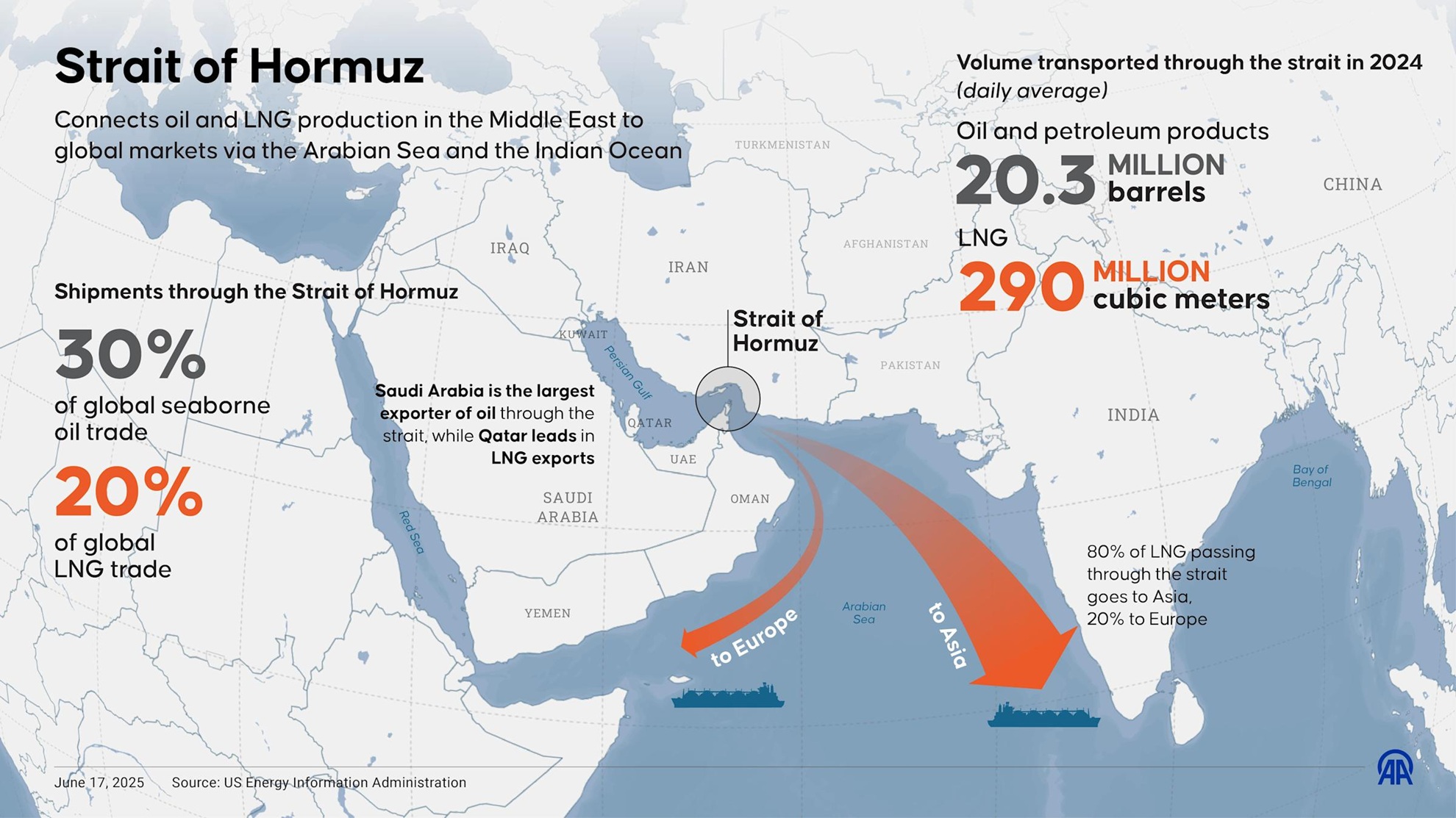
135M idle barrels — days of cover against each demand benchmark
vs. Strait of Hormuz daily flow (20M bbl/day)
6.75 daysof Hormuz throughput covered
6.75 days
0
5
10
15
20
25
30 days
vs. Global oil consumption (104M bbl/day)
1.3 daysof world demand covered
1.3 days
0
5
10
15
20
25
30 days
vs. US Strategic Petroleum Reserve release (1M bbl/day)
135 daysof full SPR release pace covered
135 days — but SPR exists to replace this role
0
5
10
15
20
25
30 days
135M
idle barrels on tankers (midpoint of 120–150M range)
~33%
of daily Hormuz flow that is idle storage, not transit
<31 hrs
is all idle storage against global daily consumption
Indicative market trajectories based on disruption severity
Scenarios for the weeks ahead
1–2 WEEKS
Ceasefire catch-up
Markets face catch-up repricing. Brent could consolidate in the US$105–US$115 range as risk premia unwind. Brent may trade lower (US$95–US$110) if strategic stocks bridge the temporary shortfall.
2–4 WEEKS
Infrastructure blitz
Shifts to structural supply shock. Brent moving toward US$150–US$200 cannot be ruled out. This is the stagflation trigger where energy costs constrain central bank flexibility.
STRUCTURAL
Geopolitical floor
Iran's transit fee demand creates a permanent input cost. The pre-crisis price structure (US$60–US$70) may not return, embedded in insurance and freight rates.
Critical Threshold
US$120 remains the level at which energy inflation becomes a direct Federal Reserve policy problem.